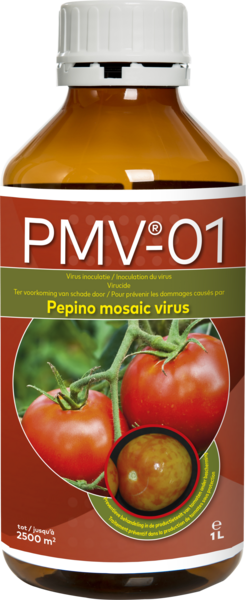
Duijvestijn Tomaten keeps PepMV under control thanks to DCM's PMV-01 vaccine
About this client
Name
Duijvestijn Tomaten
Sector
Greenhouse horticulture
Location
Pijnacker (Netherlands)
"
For us, vaccinating against PepMV feels like taking out an insurance policy. Thanks to PMV-01, we know that our crops are protected and that gives us an immense peace of mind
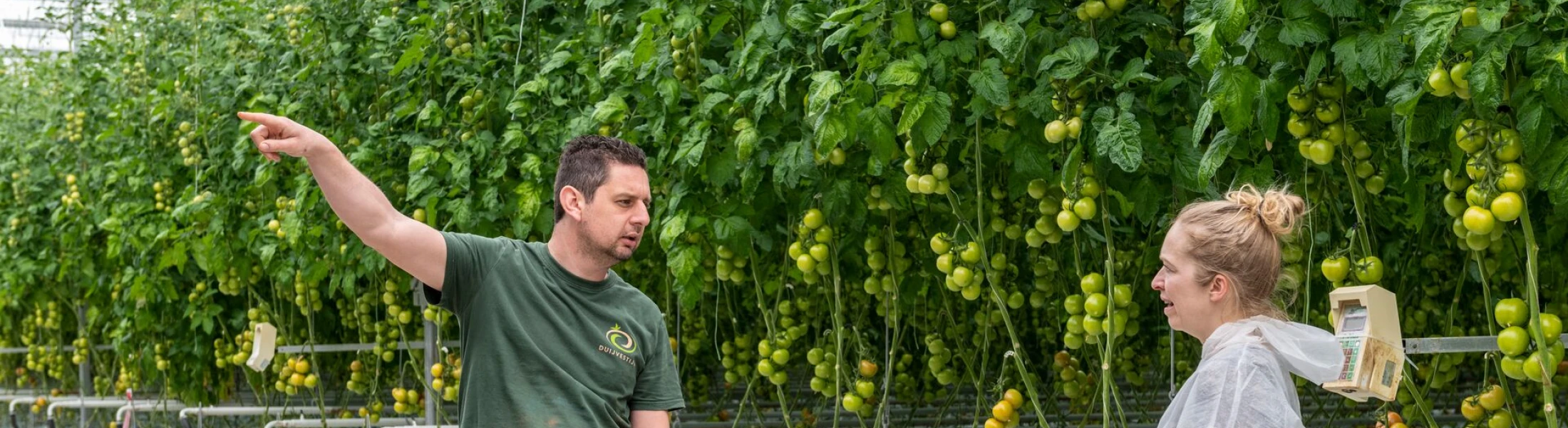
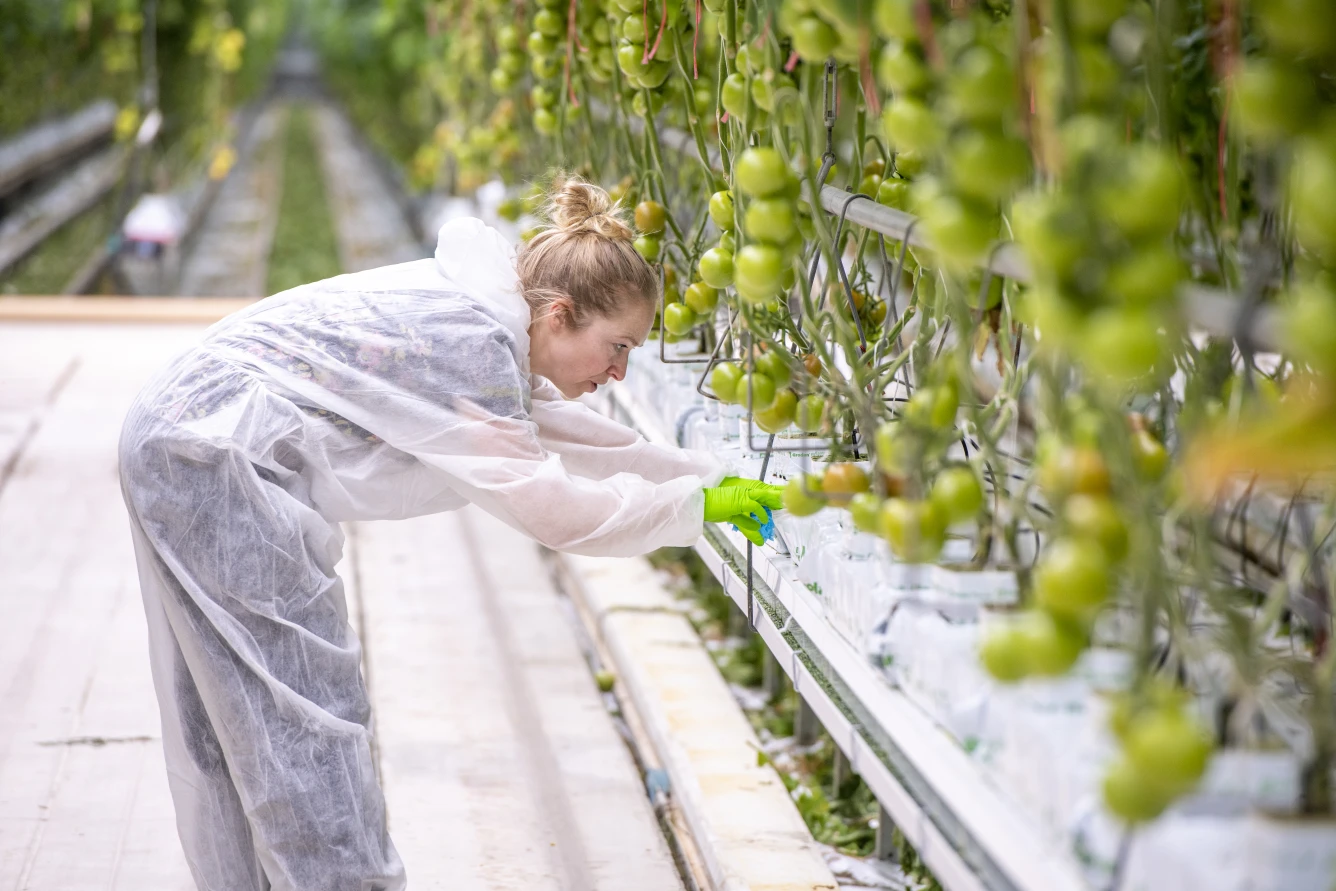
Recommendation and advice from Duijvestijn Tomaten
Richard Enthoven recommends PMV-01 to all growers who are serious about virus control. "PepMV is always present. You can wait for it to show up, or you can stay ahead of it. For us, it is clear: preventive vaccination is the best strategy." His advice to fellow growers is to apply the vaccine early and carefully. "The earlier you vaccinate, the faster the plant will grow through it. It is important to approach the entire process properly and DCM can really help you with that. Their knowledge and guidance ensure that you will not be faced with any surprises." He also emphasizes that vaccination is just one part of a broader strategy. "Hygiene, variety selection, climate control – it all plays a role. But by keeping PepMV under control with PMV-01 , you create the basis for a vital plant that is also more resistant to other challenges. That's what it's all about in the end: resilient and sustainable cultivation."