Greater crop stability and stronger plants
Every grower aims for uniform growth, consistent plant development without peaks or dips, and minimal crop losses. Critical moments, such as regrowth after potting or periods of extreme or highly variable weather, largely determine the final result.
At those moments, one factor is crucial: resilience. Plants must be able to recover without growth stagnation or setbacks and maintain their quality until delivery.
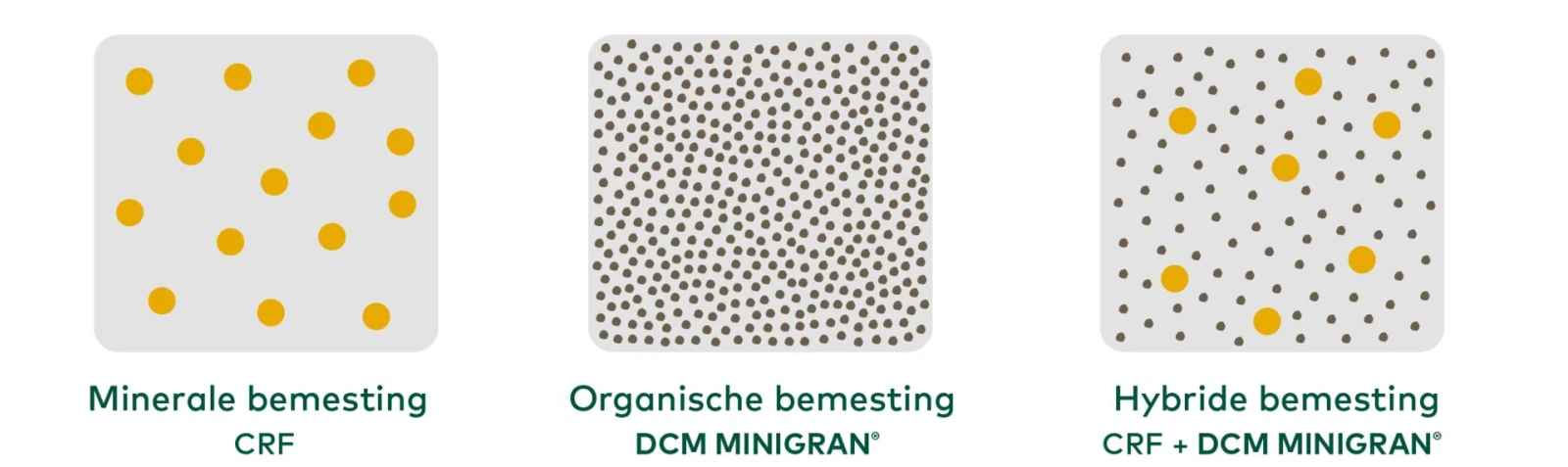
The good news: there’s no need to abandon your mineral fertilisation strategy. By gradually introducing organic fertilisers into a hybrid approach, even small changes can already deliver noticeable results.
Why adding an organic component makes the difference
Your fertilisation strategy directly influences the quality of your planting material. Many professional programs combine base fertilisation with supplementary fertigation. Partially replacing mineral with organic nutrients further strengthens this system because it:
increases natural plant resistance
stimulates root development
reduces nutrient leaching
activates and supports soil life
The result: more stable growth and fewer corrective interventions.
How to apply hybrid fertilisation in practice
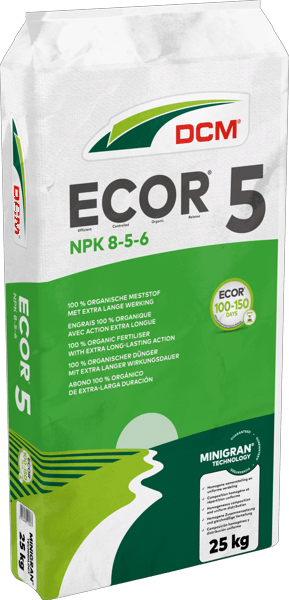
How can you shift from purely mineral fertilisers to a more organic way of supporting your crops? This transition can be made easily and step by step. → Start by partially replacing your existing mineral fertiliser with an organic fertiliser that has an extra-long-lasting effect such as DCM ECOR® 5. The exact replacement rate depends on your crop, substrate and production planning. Contact one of our DCM experts for tailored product advice for your crop.
When do you see the greatest effect?
Hybrid fertilisation proves its added value especially at times when plants are most vulnerable, namely during the stages in which fluctuations can cause the most damage :
during initial growth or regrowth after potting
during periods of stress (heat, wet spells, changeable weather)
in the delivery phase, where quality must be maintained without triggering excessive growth
Practical results: trial at Streng Growers
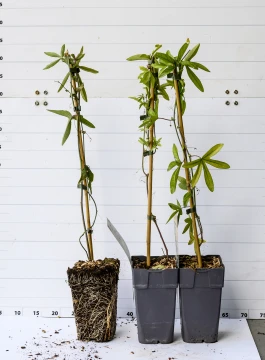
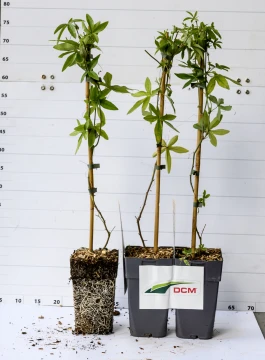
A practical trial at Streng Growers nursery in Boskoop (The Netherlands) evaluated hybrid fertilisation in pot cultivation using peat-free substrate. After four growing cycles using DCM ECOR® 5, the grower reported high satisfaction with the growth and uniformity of Passiflora. In a second crop (Gaultheria), the combination of DCM ECOR-FOS® and DCM VIVISOL® already delivered a clear improvement in crop results and plant quality after just one cycle.
View the detailed trial results here.