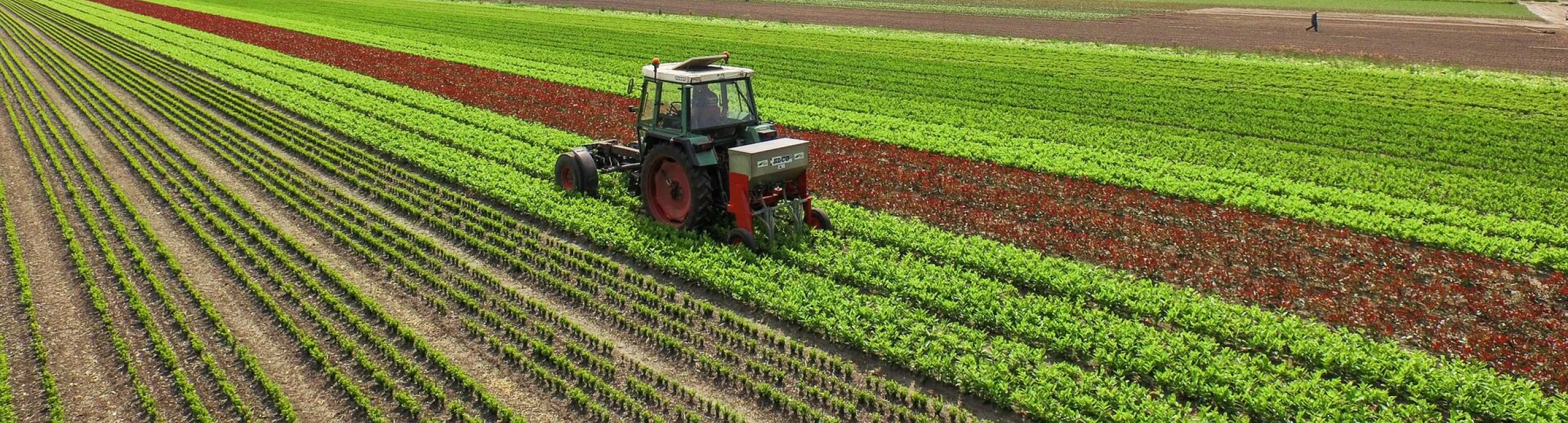
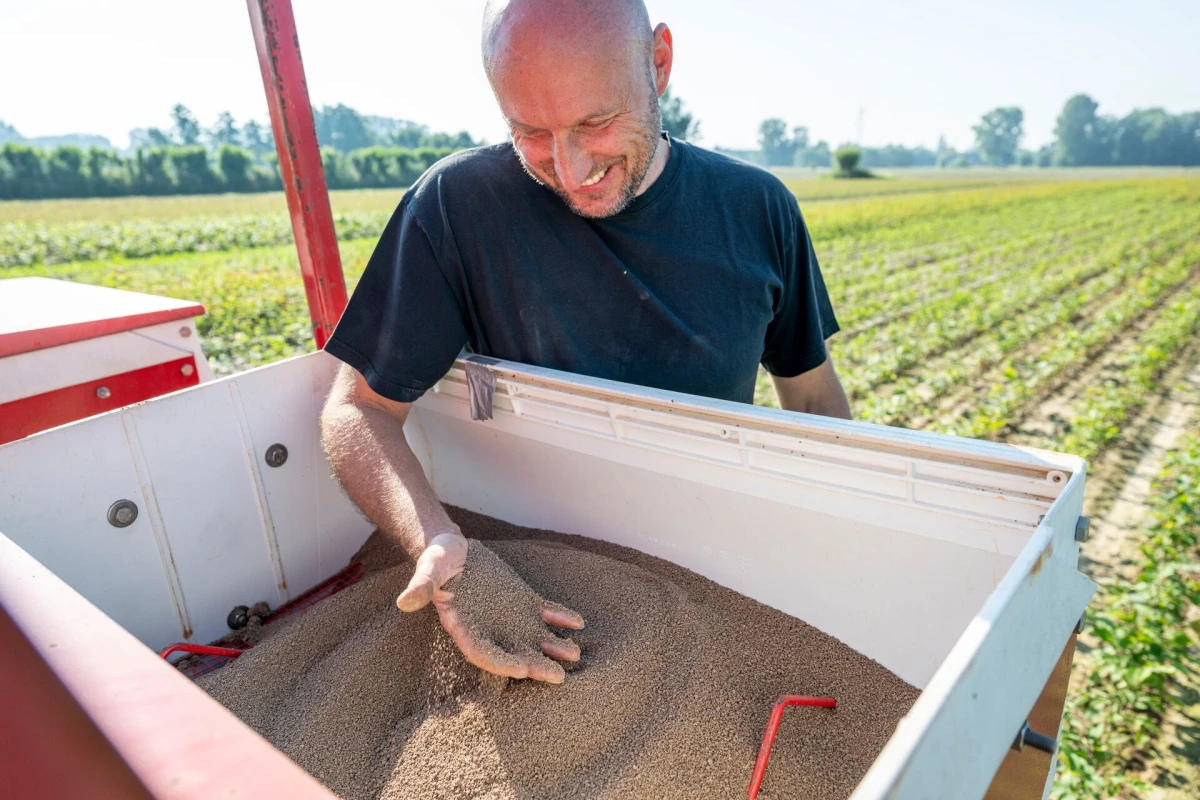
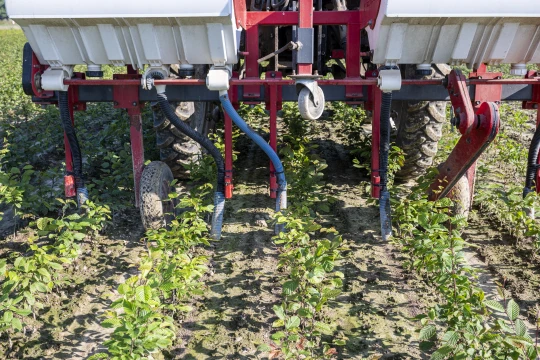
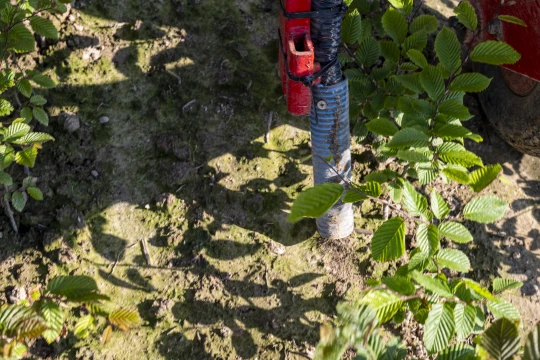
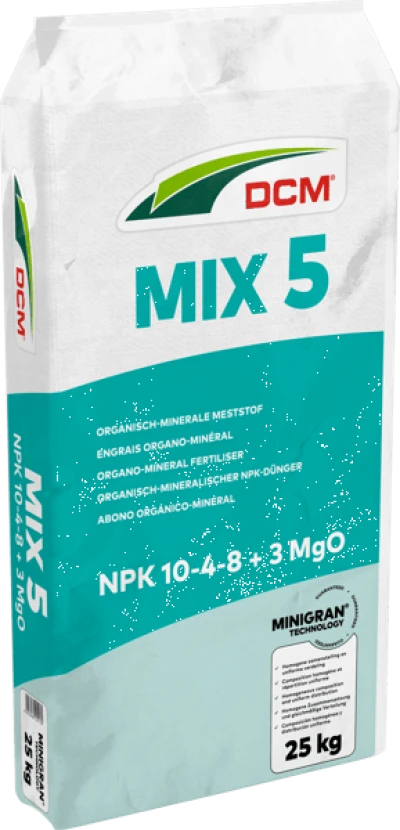
Organo-mineral fertilisers such as DCM MIX 5 are particularly well suited for this application method, as they release nutrients gradually, with little risk of root burn.
In practice, precision fertilisation can lead to fertiliser savings of 20 to 30%, without compromising plant quality..
4. Reducing nutrient leaching
Leaching is a major cause of nutrient loss in open-field cultivation. Nitrogen, in particular, can be washed out of the root zone during periods of heavy rainfall.
The type of fertiliser used plays a decisive role in this process.
- Mineral fertilisers contain nutrients in a readily soluble form. While they are quickly available to plants, they are also more susceptible to leaching, leading to fertiliser losses and a higher environmental impact.
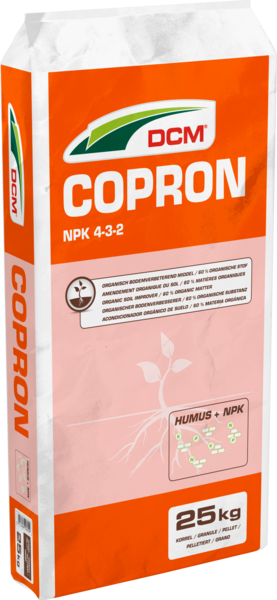
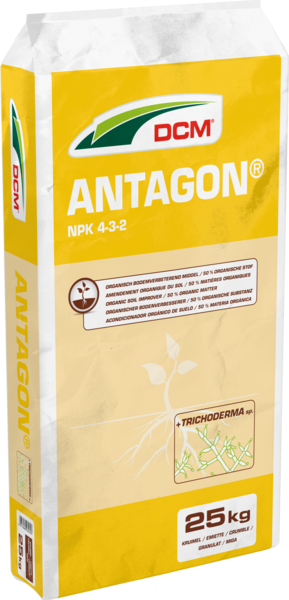
- With organic and organo-mineral fertilisers, nutrients are largely bound to organic matter. Under the influence of soil organisms, they are released gradually over time.
This results in:
The soil itself also influences leaching losses. Soils with higher organic matter and clay content have a higher cation exchange capacity (CEC). This enables them to retain nutrients such as potassium, magnesium and ammonium more effectively, making them less susceptible to leaching outside the root zone.
5. Soil life enhances nutrient use efficiency
A healthy soil life therefore plays a key role in efficient fertilisation. Bacteria, fungi and earthworms break down organic matter, make nutrients available to plants and improve soil structure. Improved soil structure allows roots to develop better and enables plants to absorb water and nutrients more efficiently. Organic fertilisers not only supply nutrients but also provide energy for soil organisms. An active soil life therefore translates into higher returns from the same fertiliser input.
Tip: Within fertiliser regulations, organic fertilisers are often assessed more favourably than mineral fertilisers. Always consult local fertiliser legislation and adapt your fertilisation strategy accordingly.
In practice
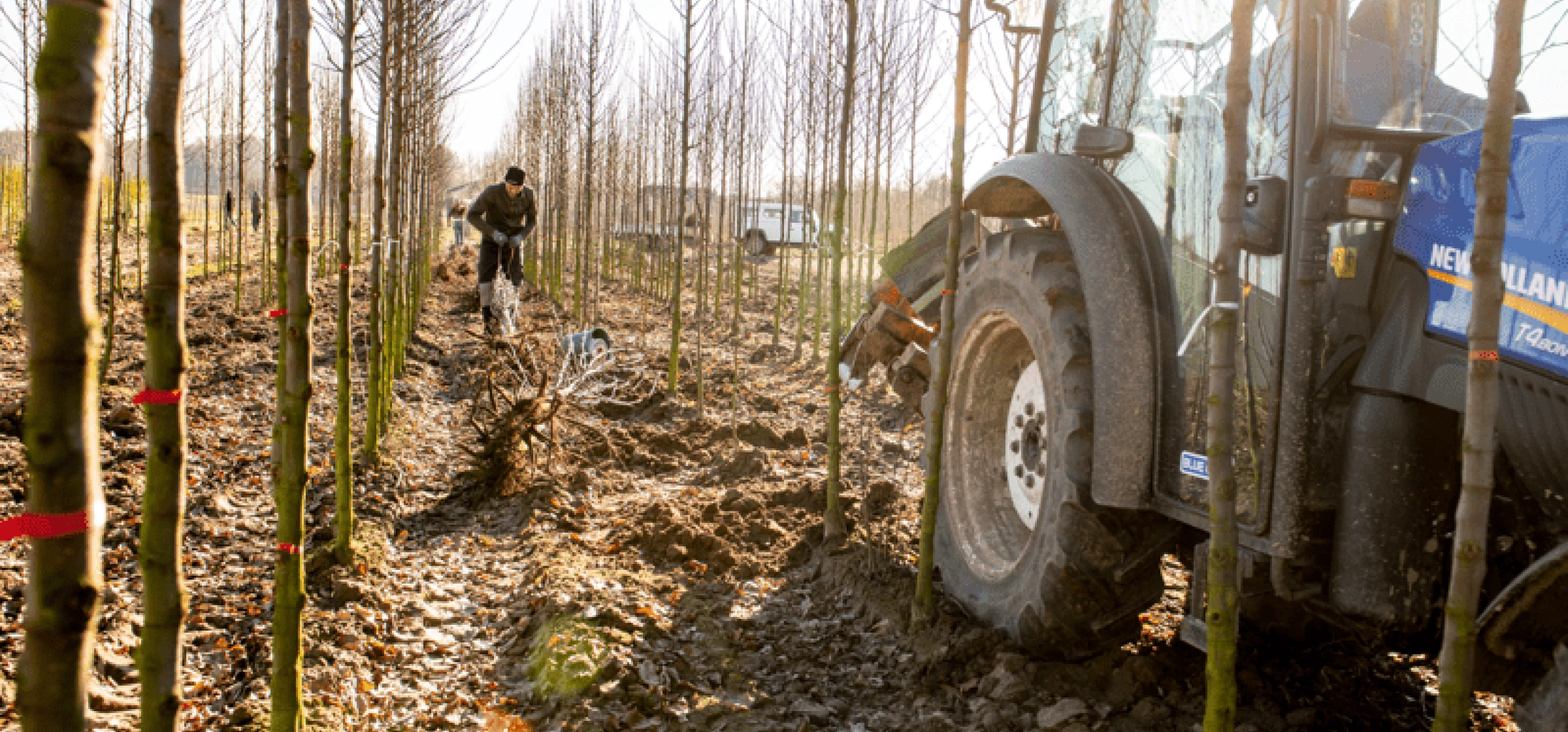
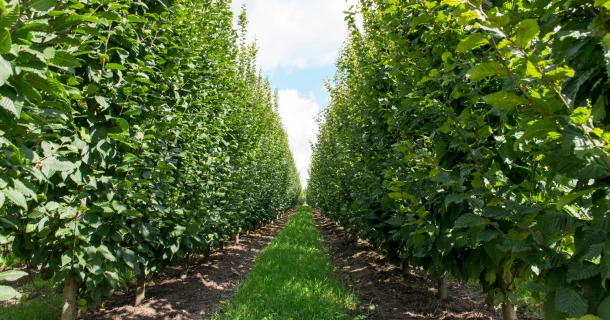
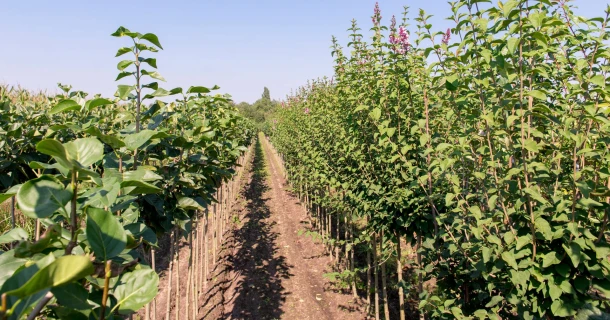
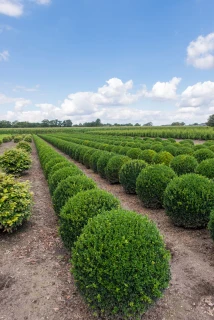
Tree nursery grower Geert Coppens has been successfully applying row fertilisation with DCM MIX 5 in his open-field crops for several years now. This approach delivers clear benefits.
In practice: less fertiliser, equally good results
More return from every kilogram of fertiliser
The future of fertilisation in tree nurseries does not lie in increasing inputs, but in smarter fertilisation. By focusing on split applications, targeted placement, well-considered timing, organic fertilisers and active soil life, nutrient use efficiency can be significantly improved. The result? Stronger growth, lower fertiliser use, reduced costs and less environmental impact.
This approach perfectly aligns with DCM's vision: investing in soil fertility while supporting tree nurseries with efficient and sustainable fertilisation solutions.