Plants need the right conditions to grow, and it is not guaranteed that they will remain healthy. To achieve optimal growth, it is important to maintain well-balanced growing conditions. This includes sufficient water and oxygen, adequate light and warmth, and, of course, the right nutrients. Three factors are crucial for healthy soil: soil structure, nutrient availability, and soil pH.
A good soil structure ensures that excess water can drain away during wet periods, while retaining sufficient moisture during dry periods. Adequate nutrient availability provides plants with the energy they need to grow and to withstand periods of stress. In addition, soil pH (acidity) plays a vital role, as it determines how efficiently plant roots can absorb nutrients. In this article, we take a closer look at the effects of lime and why it is essential for maintaining healthy soil.
Properties of lime:
Supplies calcium and (magnesium)
Raises soil pH
Improves soil structure, especially in heavy clay soils
Hoe kun je pH/zuurtegraad reguleren?
De bodem heeft van nature een bepaalde pH-waarde, die zich in de loop der jaren ontwikkelt. Deze pH kan worden verhoogd door kalk te strooien; de hoeveelheid kalk bepaalt in welke mate de pH stijgt.
Zelfs wanneer de pH van de bodem op het juiste niveau ligt, is het aan te raden om jaarlijks kalk toe te passen. Door de omzetting van voedingsstoffen in de bodem (mineralisatie) daalt de pH namelijk elk jaar met ongeveer 0,1 tot 0,2. Wanneer er gedurende lange tijd geen kalk wordt gestrooid, kan de pH te laag worden. Hierdoor kunnen planten voedingsstoffen minder goed opnemen en worden ze gevoeliger voor ziektes en schimmels. De meeste planten groeien het best bij een pH (KCl) tussen 5,5 en 6,0. Daarnaast zijn er ook zuurminnende planten, zoals rododendron en hortensia, die juist een lagere pH verkiezen. Aan de andere kant zijn er kalkminnende planten die beter gedijen bij een hogere pH, zoals buxus en lavendel.
Door jaarlijks een beperkte hoeveelheid kalk toe te dienen bij de juiste planten, blijft de bodem in balans en worden planten weerbaarder tegen ziektes en schimmels.
Supplying calcium or magnesium
When the pH in the garden is at the correct level, but a soil analysis shows that calcium or magnesium (or both) are insufficient, these elements can be supplemented in a targeted way.
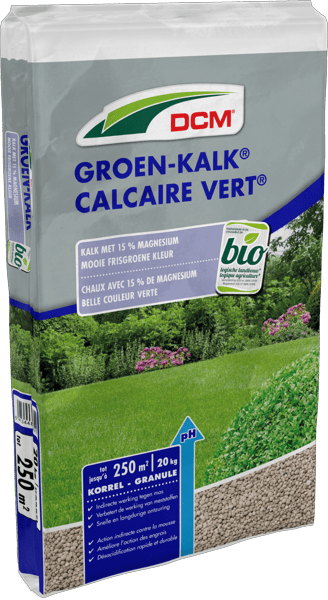
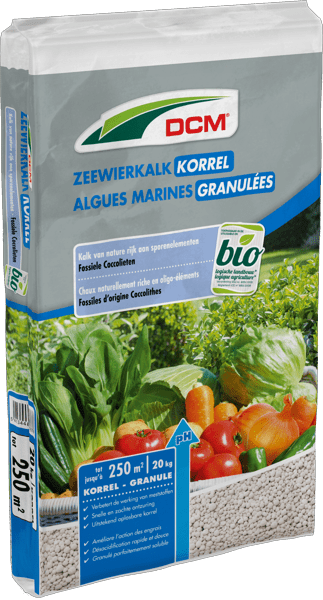
Applying a limited amount of DCM GREEN-LIME or DCM SEAWEEDLIME GRANULES adds calcium and/or magnesium to the soil without significantly increasing the pH. This ensures that these essential nutrients remain available to the plants while maintaining a balanced soil acidity.
Improving structure in clay soils
Heavy clay soils naturally tend to compact easily, which can negatively affect plant growth. However, soil structure can be improved with the help of lime. Clay consists of very fine particles, often described as plate-like structures, that easily bind together. Calcium plays an important role in this. This element has a relatively large molecule (compared to potassium, for example) and carries a positive charge, allowing it to position itself between the clay particles. As a result, the clay plates are less likely to stick together. This improves soil structure and increases air content in the soil, which benefits root growth and overall plant development.
Which type of lime should you apply, and when?
DCM offers two types of lime suitable for use in the garden: DCM GREEN-LIME andDCM SEAWEEDLIME GRANULES. DCM GREEN-LIME contains both calcium and magnesium. Magnesium can have a positive effect on the colour and vitality of lawns. DCM SEAWEEDLIME GRANULES contains only calcium. This type of lime is milder and dissolves quickly in the soil, allowing calcium to become rapidly available and enabling the soil pH to be adjusted efficiently. If a soil analysis is available, its results can help determine which type of lime is most suitable for your situation. Your DCM account manager can provide tailored advice.
“Calcium is immobile, so apply lime well in advance during the winter period to ensure calcium is available in spring”
Application rates and timing
Apply DCM GREEN-LIME from November to the end of January. This lime requires 1.5 to 2 months to dissolve.
Apply DCM SEAWEEDLIME GRANULES from the end of January to the end of March. This lime takes approximately 2 weeks to dissolve.
Read more here about the benefits of good soil structure here.