2. The buffering capacity of the substrate
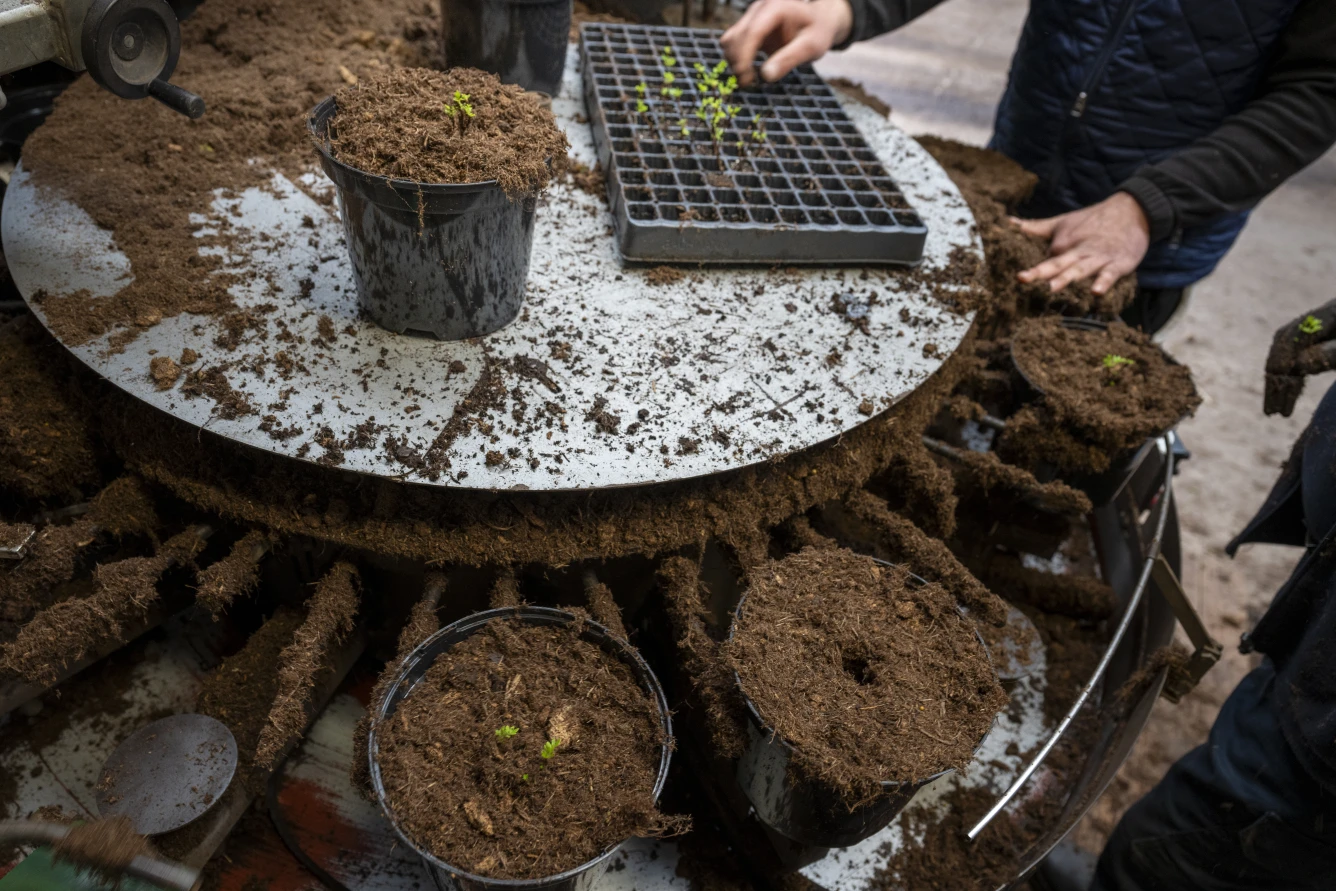
The composition of the substrate also plays an important role in maintaining stable EC levels.
Substrates with a limited buffering capacity are less effective at retaining nutrients. As a result, they react more quickly to changes in fertilisation or irrigation, making EC fluctuations more likely.
A well-balanced substrate with sufficient organic matter contributes to a more stable nutrient availability.
3. The way nutrients are released matters
Not only the amount of nutrients is important, but also the way they become available to the plant.
Mineral fertilisers supply nutrients directly to the plant. This allows for precise nutrient management but also requires careful alignment with the crop’s actual nutrient uptake.
Organic fertilisers follow a different pathway. Their conversion into plant-available nutrients is driven by the soil life, resulting in a gradual nutrient release that is better aligned with the plant’s natural uptake rhythm.
Watch the video here about how organic and mineral fertilisers work.
4. Liquid fertilisation requires precision
Liquid fertilisation allows for rapid adjustments but requires accurate dosing and careful alignment with water quality and conditions in the greenhouse or container field. When these factors become unbalanced, salts can accumulate more rapidly. Regular monitoring of both the nutrient solution and the substrate EC helps ensure timely adjustments.